Three Films by Leos Carax: Vital Signs
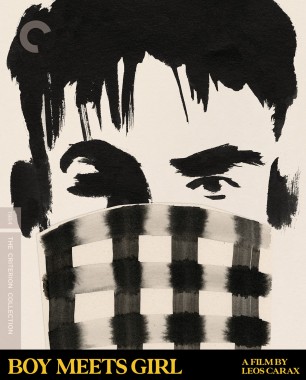
When Leos Carax shot his first feature-length film, Boy Meets Girl (1984), he was only twenty-three years old. By that point, he’d gone regularly to see silent movies at the Cinémathèque française in Paris, written film criticism for Cahiers du cinéma, and sat in on cinema classes at the Sorbonne Nouvelle. He never went to film school, and before he shot his first film, he’d never been on a shoot. Those silent movies made a deep impression on Carax; their very silence was potent for him, their very inventiveness. The film criticism, not so much; he gave it up rather quickly. I get the feeling his relationship to watching movies needed to be more direct than that, the line of connection going from the films that greatly affected him to the films he himself made. Those silent movies, and the other movies he saw, from France, elsewhere in Europe, and the United States, sent him into a space of filmmaking, just as his movies have always sent me into a space of writing fiction.
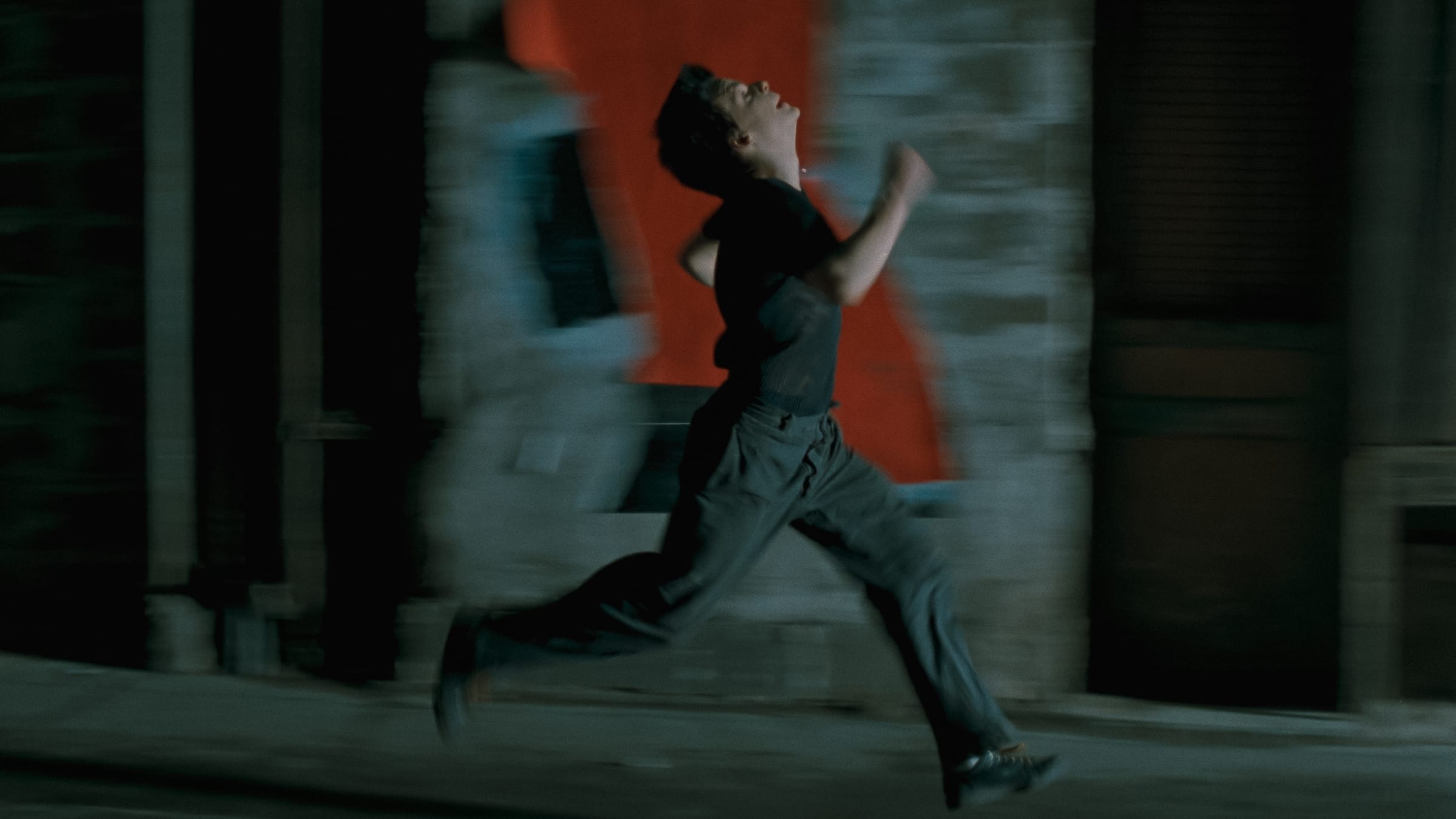
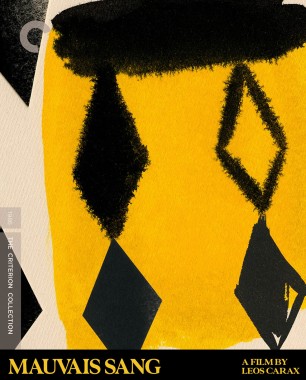
When I saw my first Carax film—Mauvais sang (1986), his second feature—I was young too. I was at the very beginning of my life as a writer, and after watching Mauvais sang, I immediately wanted to write. I was mesmerized by the iconic scene in which the film’s main character, Alex—in this trilogy of films, which also includes The Lovers on the Bridge (1991), Denis Lavant plays a character named Alex, though a different Alex each time—begins to move immediately upon hearing David Bowie’s “Modern Love.” Slowly at first, a cigarette in his mouth, holding his stomach, limping, then faster, abjectly almost, punching the air, dragging one leg after the other, jumping up to hit a wall and then turning in circles against it, hitting himself, running with his head forward and then back, faster now, running, running completely.
But I was equally taken in by Alex’s magic tricks and ventriloquism and by the moments in which we hear characters talk to each other in voice-over while we watch them do something else entirely, which is another kind of ventriloquism. Like Alex’s breakup with his young and impressionable lover, Lise, played by Julie Delpy. We hear him say goodbye to her in voice-over while she chases him. Their faces blur, almost into each other, the running sped up. “Lise, my little Lise, I’m leaving . . . I know, I’m a killer. I’m a killer, my warm gun left at the scene.” Later, we will watch Anna, played by Juliette Binoche, walk toward a phone we don’t hear ringing. She moves her lips, but we don’t hear her speak. I was enthralled as well by the slapstick choreography of the greeting between Marc and Charlie; the choreography of the fight between Alex and Marc, their faces pressed grotesquely against a glass window as they try to wrestle each other to the floor; the choreography of Alex stumbling drunk around a corner and down the street, holding onto the wall of a building, a toddler stumbling behind him. I loved the film in its entirety, but these were the moments that existed on a special plane for me, where a portal opens, and something fleeting—jagged or comic or uncanny or beautiful—comes into view.
The Seine, the radio, voyeurism, couples on the verge of breaking up or of forming, suicide, the thief/con man, Bowie songs, hitting oneself, movement and dance, Mireille Perrier and Juliette Binoche recur across this trilogy. And, of course, Denis Lavant. But perhaps more than anything else, what links these films is a sense of aesthetic experience, due, in part, to the extraordinary cinematography of Jean-Yves Escoffier, whom Carax worked with in each. Quite simply, the films are deeply pleasurable to watch, not only because they are visually appealing, but also because they are satisfyingly strange, a welcome discordance. The same is true for Carax’s later films, the dark and haunting Pola X (1999), the utterly original and genre-defying Holy Motors (2012), the enchanting and monstrous musical Annette (2021), even though each is from a very different era of filmmaking, made many years apart and with different preoccupations.
All of Carax’s films are rich in symbols, often mysterious. Sometimes we don’t know whether to read them as symbols at all; maybe they do exist as doorways to the subconscious mind, from Carax’s mind to ours. The face of the older man that the camera fades to in an early scene in Boy Meets Girl that just as quickly fades away. Is it Henri, the man who has just been left by Maïté? We don’t know. Later, a man’s voice whispers Alex’s name, waking him up. Who is he? The man who follows directly behind Bernard in another odd moment of choreography before Bernard descends into a subway station. The huge picture window in Mireille’s apartment in which she can see her neighbors and be seen in return, that at times makes it look as if she is sitting outside. A long monologue from Alex to Mireille that lapses into nonsense. It doesn’t matter whether it makes sense, because it brings into existence what I think is the film’s reality—silence, absurdity, the sublime.
Boy Meets Girl opens with what sounds like a child speaking slowly, in a ghostly, ragged voice—“Here we are still alone”—and what sounds like something being written or drawn in Magic Marker. We don’t see a child, we don’t see what is being drawn, only a closed door, the light turning out from underneath it. We hear footsteps, which are moving away. After, we see a hand holding a rosary in front of a body of water. It is the Seine, black and flowing, with lights reflected in its waves, little triangles, and then lines of white. We see as if on a boat, looking out at another boat, bright with lights and people. Now the waves are bigger; now we are moving fast.
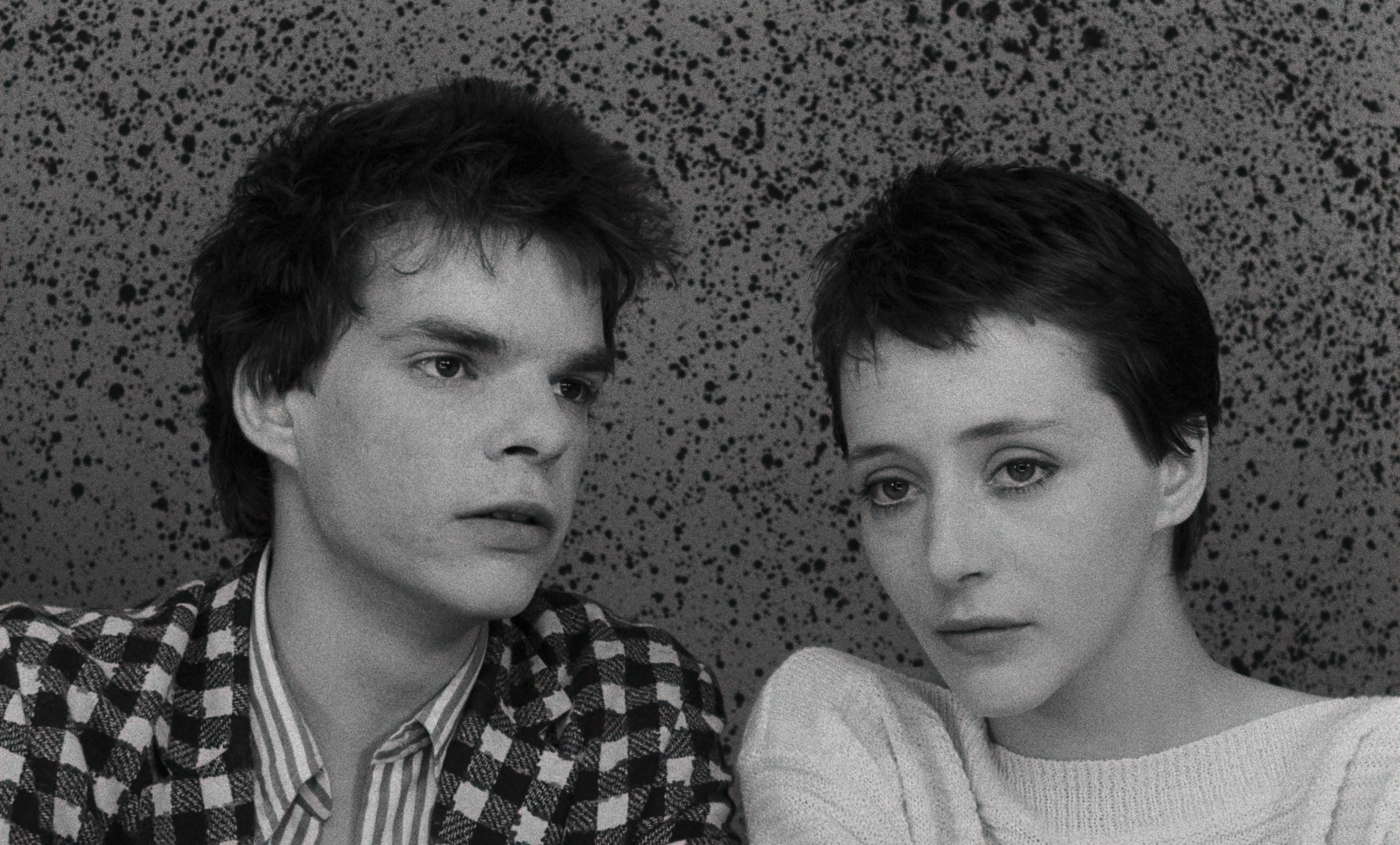
Stylistically, Boy Meets Girl looks much older than the 1980s, harking back to the 1960s, to the French New Wave. Here, we meet Lavant’s Alex for the first time—handsome, with a boyish face that contains a trace of menace. Sometimes he looks innocent; sometimes a wave of darkness passes over his features. It’s easy to understand what Carax saw in Lavant, why he wanted to film him, not just once, but in all three of these films, and in later films too. He moves almost as a dancer would; it is part of his appeal as an actor. We also meet Mireille Perrier, who plays a character with the same first name, who some critics have likened to a silent-movie actress. Indeed, it isn’t hard to see Renée Jeanne Falconetti as Joan of Arc in Perrier, her face turned toward the light.
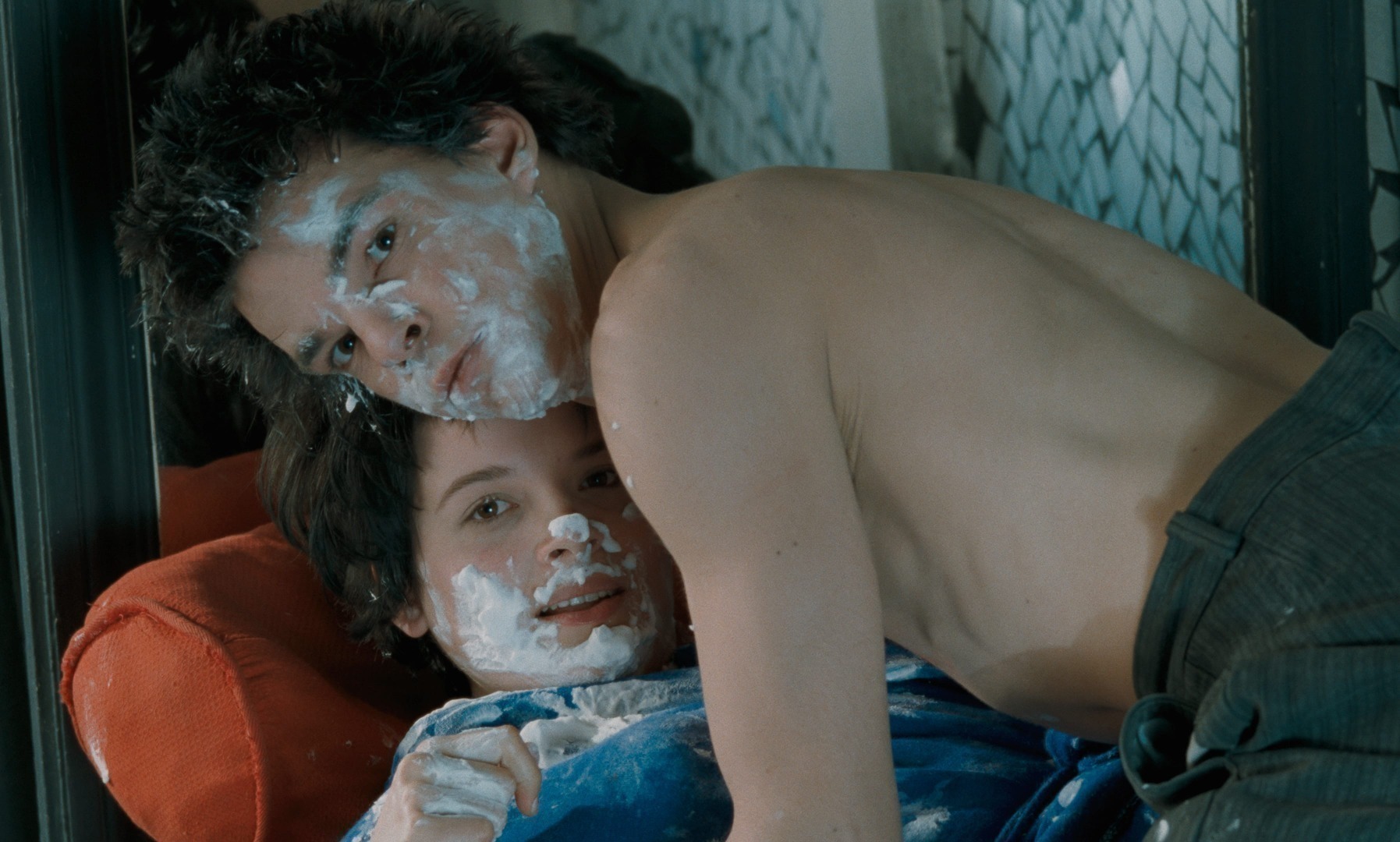
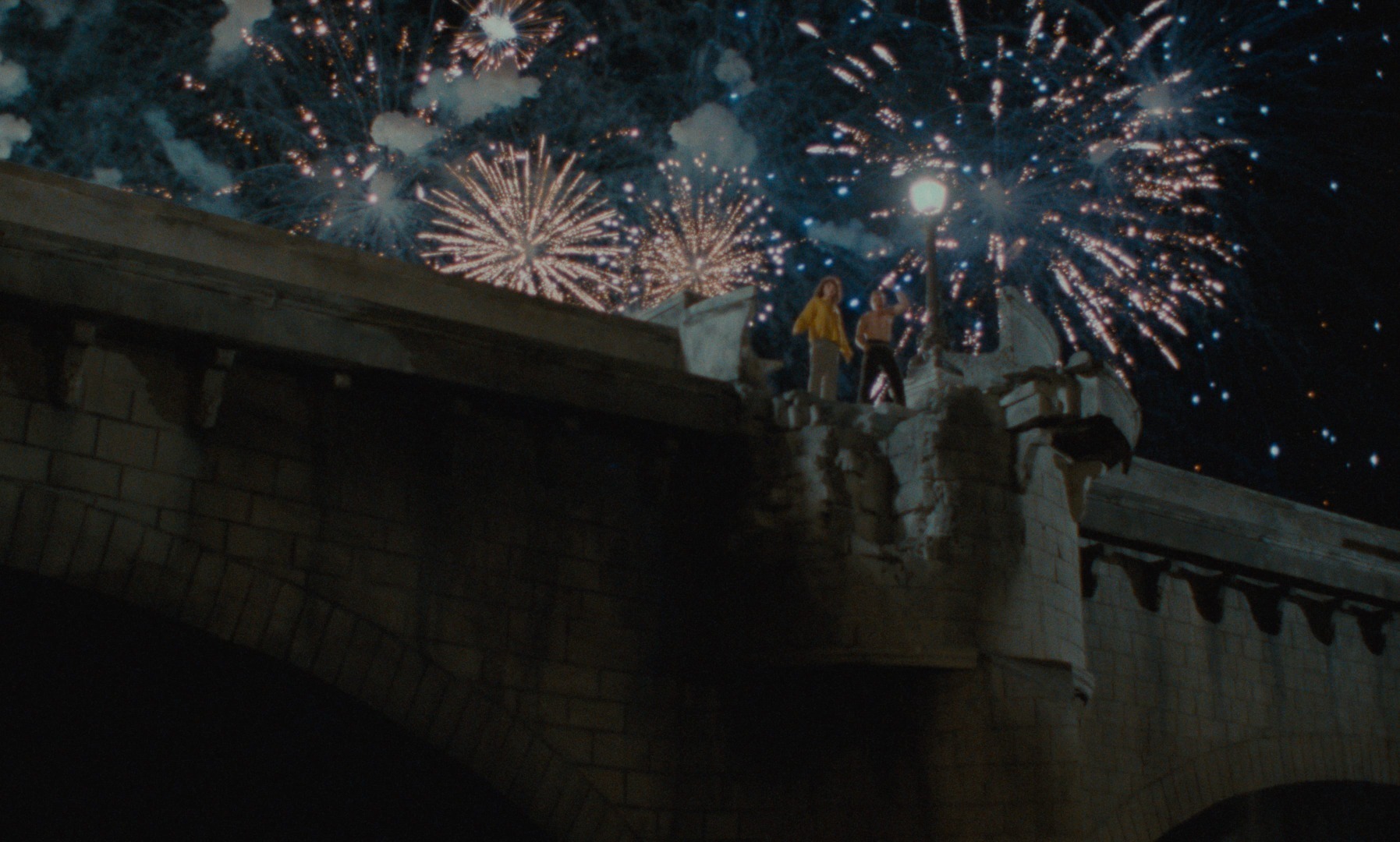
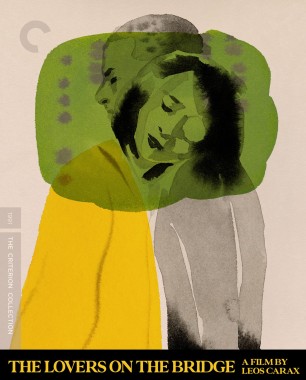
Suddenly, fireworks shoot into the sky and fall all around them, part of the celebrations for the bicentennial of the French Revolution. In the clamor, the two of them fire Michèle’s gun, Alex limping along the length of the bridge in that strange and hypnotic gait of his, Michèle shooting from the back of the bronze statue of Henri IV’s horse. When music begins playing, Michèle starts moving first, spinning around on the bridge, her arms outstretched, spinning faster when the music changes, throwing her arms crazily out into the air, Alex following her with bottles in his hands, shattering them on the ground, then kicking a stone post, until he and Michèle fall and run against each other, finally dancing some kind of waltz, Michèle shrieking with drunken ecstasy. Then comes the famous scene of Michèle water-skiing in the Seine, Alex pulling her along in a boat they stole for the occasion. Some critics have argued that this should have been the climax of the movie. Perhaps, but why shouldn’t an exhilarating scene like this exist in the middle, for its own sake, an experience unto itself, not simply for the sake of narrative? It changes what the space of the film will be. And it is, after all, when Alex and Michèle begin to fall in love, when they break through to each other. Why should the complexities of the film be smoothed over?
The next evening, Alex and Michèle lie in the green grass, blanketed by shadows. It is the first time in this trilogy that we see love expressed physically. Their love is imperfect, maybe even abusive on the part of Alex, but deep and real. Arm in arm, they walk through Paris to Bowie’s “Time Will Crawl.” When they pass a nightclub with ground-level windows shining out into the dark, Michèle drops to the sidewalk to look at the feet of the dancers, strobe lights flashing around them. What does looking mean to her here, now when she is losing her sight? She nods her head to the music, a faint smile on her face.
When Alex sees missing-person posters of Michèle in a subway station announcing a possible cure for her eye condition, he destroys them. When he discovers more of the posters in the back of a van, he sets them on fire, and when the van explodes, the man putting up the posters catches on fire too. Alex just stands there, watching. But he can’t in the end block Michèle from learning of this news, because it’s on the radio too. When she hears the missing-person message put out by her father, she’s in disbelief, stumbling and mumbling to herself. “A hope . . . The end of this nightmare . . . Just think, Alex.” For the second time, Alex just stands there. “My eyes!” Michèle yells. In that moment, she understands that Alex doesn’t want the best for her if it might take her away from him.
To think of this trilogy is to see Alex in this moment. No matter the film, the character of Alex is sympathetic, but he is unsympathetic as well. In The Lovers on the Bridge, he does nothing to help the man he inadvertently sets on fire, yet he himself has had the experience of being run over by a car. When he thinks that Michèle has spent the night with someone else, he hits her across the face, but he also cuts his stomach with a knife and blows off one of his fingers when she finally does leave. We feel that she is the only person who has ever loved him, who has ever shown him any kind of real warmth. In each of these three films, Alex kills, or threatens to kill, or is in some way responsible for the death of another, or himself dies. Yet there is lightness to him as well, mischief, gaiety. This is part of his appeal as a character, his contrary impulses and contradictions.
Carax’s movies are like that too—comedy or ecstasy edged with danger or harm, or a threat out of which humor emerges, so that the darkness isn’t as unsettling as you at first think it might be. When I watched each of these three films, I wavered between different moods, nervous in one moment, even if I was laughing in the next, or overcome with emotion. It is part of what this trilogy allows us—a way to experience different psychic states that we might not otherwise be able to enter, that we might not even know exist. Or we do know, and then there is a comforting recognition of a state or feeling we’ve never been able to put into words.
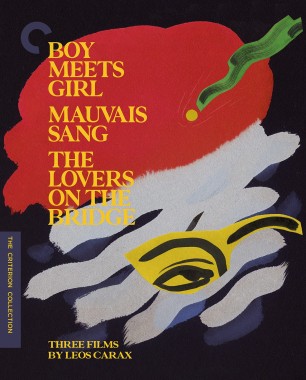
In a 2013 interview at the Harvard Film Archive, Leos Carax said, “When I’m asked, ‘For who do you make films?’ I could never answer, really. But now, I think that we make films for the dead, and then we show them to people who are alive.” This is one way we might understand Boy Meets Girl, Mauvais sang, and The Lovers on the Bridge, for how else could one communicate with the dead but through the kinds of symbols and signs and images and music we find within these three films—otherworldly, mystical, and full of life.
More: Essays
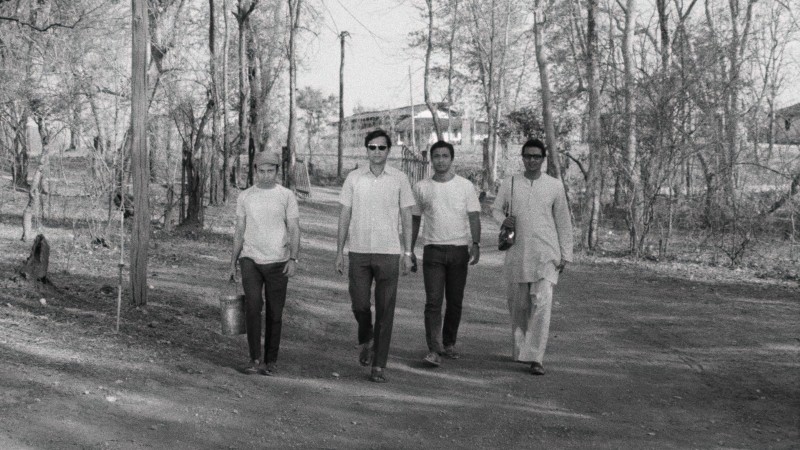
Days and Nights in the Forest: Into the Woods
In this tale of four privileged bachelors who embark on a trip to the Indian countryside, Satyajit Ray balances a biting critique of masculine fragility with splendid visual grace.
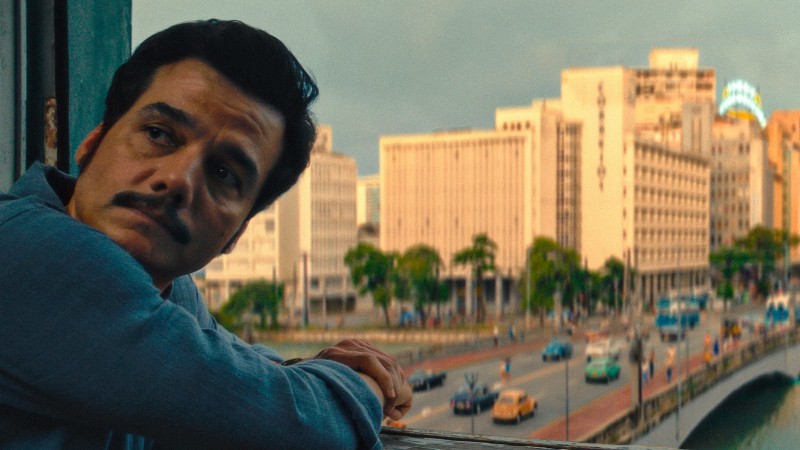
The Secret Agent: Left Out of History
Kleber Mendonça Filho explores the elisions of history and memory in this splendidly polymorphous thriller about a man on the run in 1977 Brazil.
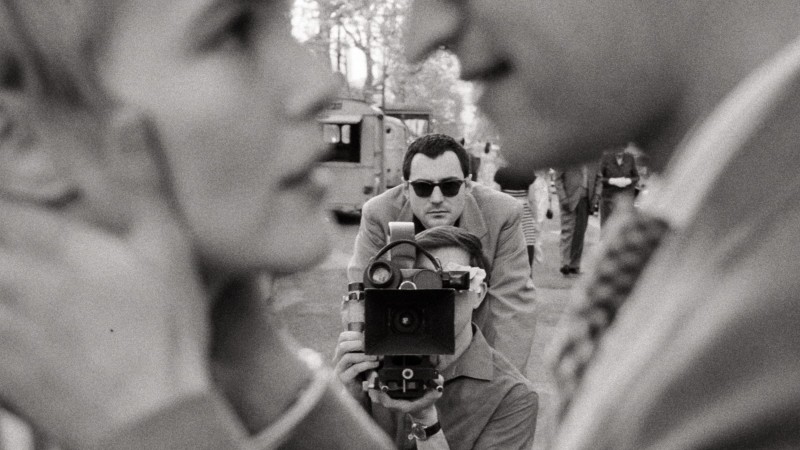
Nouvelle Vague: Insolent Like No One Else
In this exhilarating account of the making of Jean-Luc Godard’s Breathless, Richard Linklater lovingly reconstructs the vanished world of late-fifties Paris and the cinephilic culture surrounding the French New Wave.
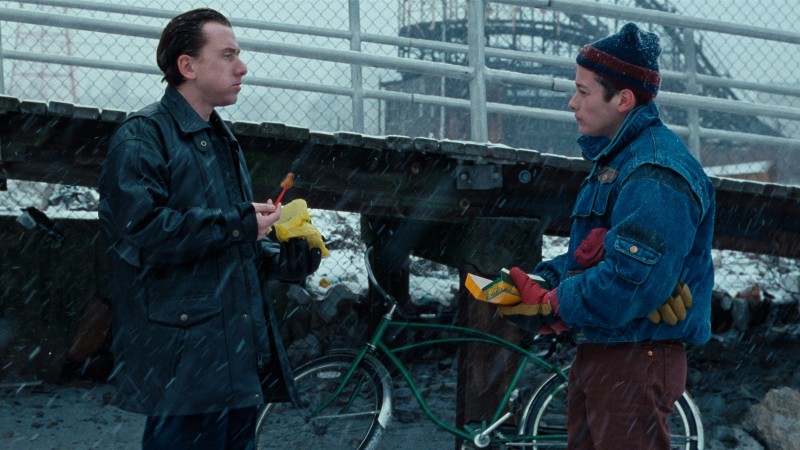
Little Odessa: He Ain’t Heavy, He’s My Brother
James Gray’s extraordinary debut feature is a painstakingly distilled tale of crime and family dysfunction, captured with a merciless gaze and a sharp attention to idiosyncratic detail.