
6Jan09

Critics Honor White Dog Release

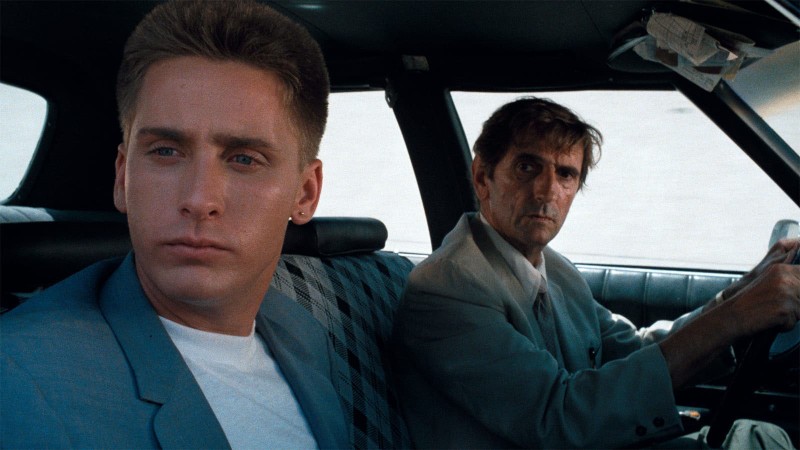
The National Society of Film Critics announced its 2008 awards this week, and Criterion won a special honor for the DVD release of White Dog. The esteemed organization, founded in 1966 and made up of the country’s leading film critics, recognized the company with a film heritage award for making Sam Fuller’s famously suppressed antiracist sensation available to a wide American audience for the first time (it had a limited run at New York’s Film Forum in 1991). Other heritage awards went to Kent Mackenzie’s long-unseen 1961 independent film about Native Americans in Los Angeles, The Exiles, which was restored and saw its first theatrical release, from Milestone, in 2008; Flicker Alley, for its silent-film DVD collections; and Twentieth Century Fox Home Entertainment, for its DVD set Murnau, Borzage, and Fox. The society gave its top new-release film award to Ari Folman’s Waltz with Bashir, and its director prize to Mike Leigh, for his latest, Happy-Go-Lucky.

Whitedogw_w160

White Dog

Samuel Fuller

1982

90 min

Color

1.78:1

0 Comments

31Dec08

The Votes Are In . . .

It’s the last day of 2008, and all the balloting is finally done. Here’s a rundown of how Criterion rated in the best DVDs of the year polls:

The Sight & Sound list included Criterion’s “gripping morality tale” Death of a Cyclist, the “incredibly beautiful” The Lovers, the “demented western” The Furies, and Pierrot le fou, with its “glorious HD transfer.”

Entertainment Weekly and Rolling Stone each picked out a favorite Criterion release for their respective tallies: the “extravagantly emotional yet movingly thoughtful” Brand upon the Brain! for the former, and Wes Anderson’s Bottle Rocketwhich, critic Peter Travers added, “looks definitive on BD”—for the latter.

For the Popular Mechanics list of 20 Must-Have Blu-ray HD Epics, Glenn Kenny cited the “breathtaking” The Third Man as well as The Last Emperor, which, he wrote, “has been given one of the most gorgeous hi-def renditions ever, by cinematographer Vittorio Storaro.” And New York magazine’s annual Culture Awards DVD top ten named the “essential” Bottle Rocket (number eight), the “heartbreaking” Kenji Mizoguchi’s Fallen Women (number six), and the triumvirate of Walker, White Dog, and Mishima: A Life in Four Chapters (all tied at number three, as “three of the 1980s’ most overlooked films”).

At IFC Film News, Michael Atkinson took an unusual approach to the annual list-making game, highlighting the best films that “first saw American screens (big or small) on digital video in 2008, be they brand-new or decades old.” His favorites included Jean-Pierre Melville’s Le deuxième souffle, William Klein’s Who Are You, Polly Maggoo?, and Larisa Shepitko’s “refreshing, heartfelt character portrait” Wings, the latter two from our Eclipse line (Series 9: The Delirious Fictions of William Klein and Series 11: Larisa Shepitko, respectively).

Dave Kehr, at the New York Times, also took a liking to Eclipse. “The most exciting Criterion releases of 2008 came from the company’s new no-frills line, Eclipse, which has been able to move beyond the established art-house classics into less familiar territory,” he wrote, naming Series 10: Silent Ozu—Three Family Comedies and the Shepitko set in particular.

And the Miami Herald called out Mishima: “It’s hard to find a disc released by the Criterion Collection that doesn’t put most other DVDs to shame in terms of the quality of the transfer or the supplements accompanying the film. But the company’s release of Paul Schrader’s 1985 drama Mishima: A Life in Four Chapters was an exceptional production, even by Criterion’s standards.”

And finally, DVD Movie Central has issued its annual movie awards, and Criterion racked up a few: Best Overall DVD and Best Restoration (’70s/’80s) for The Last Emperor, Best Reissue for Chungking Express, and Best DVD Producing Studio.

Thank you all for watching. Here’s to a great 2009. And, as always, happy viewing!

2 Comments

30Dec08

The Lady Vanishes Revisited BY ROBIN WOOD

If I had not seen The Lady Vanishes at the age of seven, I might never have become a film critic.

I was the fifth child of parents well into middle age: clearly an “accident,” as I was ten-years-plus younger than the other four. My siblings were decent enough to me, but they had their own lives to muddle through, with a father often away in the United States selling the antiques my mother shipped out to him. The two girls fought all the time, usually over clothes, the two boys bonded. I wasn’t sent to day school until I was six and seldom met other children. This background ensured that I was (a) a loner and (b) extremely precocious.

I’m not sure just when I started going to the cinema. I suspect it began as a way of keeping me occupied and out of mischief. The series of young, inexpensive maidservants hired by my mother for housework also had the task of keeping me entertained whenever there was a movie my mother considered “suitable” for me at the local theater—suitable meaning no crime or sex. But in the early years of this activity, I can’t recall a single film that had any lasting effect on me. They were not children’s films, and my grasp of their plots was very weak. I think the maids enjoyed them more than I did, but I always wanted to see them out of curiosity, struggling with the intrigue as best I could.

I recall vividly only one occasion. My father must have been in America, my mother scouring the countryside after antiques, because I was left to the mercies of my elder siblings, who decided one evening that they wanted to see a film. It was entitled Murder by an Aristocrat, and I was sworn to the deepest secrecy: Mother must never know! I had no idea what an aristocrat was. The nearest I could get was “oystercrat”: the film would be about someone dropping a large crate of oysters onto someone’s head. However, it was late at night, and I slept through most of it. I woke up briefly, though, just in time to see a person in a black hood climbing into a house through an upstairs window at night, and I was thrilled.

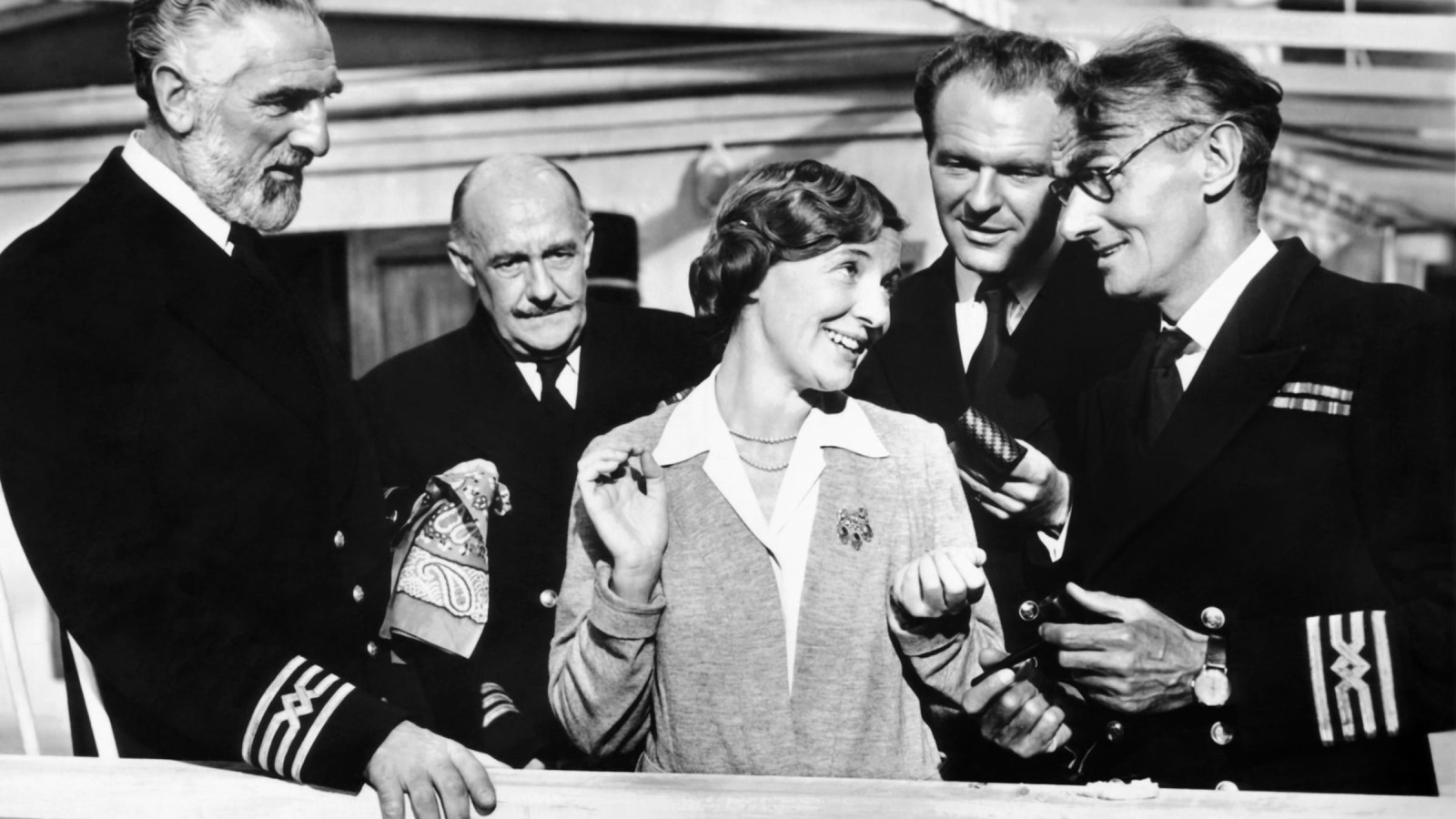
But The Lady Vanishes was different. For one thing, I would have seen it in the afternoon, wide awake. And its combination of very British humor (Basil Radford and Naunton Wayne’s bed scene sending me into mild hysterics long before I knew anything about sexual innocence or denial) and the tension of the train held up by landslides in a foreign country, plus a mysterious nocturnal murder, had me hooked long before the lady vanished. The film was very popular, repeatedly revived, and I saw it again and again, never missing an opportunity. It is certainly among Hitchcock’s most perfect films (though not the most profound). If it has a dull or dead moment, I have still not found it. And somehow the name Hitchcock became embedded in my mind: it hadn’t occurred to me before that films had directors, and that these directors were somehow important. I trace my career back to that film, which I still love.

If there is no chapter on The Lady Vanishes in my book on Hitchcock, this is purely because it is too perfect, so transparent that there is little to say. The labyrinthine complexities of Vertigo were far away.

P2_w160

The Lady Vanishes

Alfred Hitchcock

1938

96 min

Black and White

1.33:1

1 Comments

30Dec08

Me and Sam Fuller BY LISA DOMBROWSKI

It is a good time to belong to the cult of Fuller.

Those of us who consider ourselves members never forget our moment of induction. Some enlisted when his films first hit the screen—lucky enough to catch The Steel Helmet in a shabby downtown theater, or Forty Guns at a local drive-in. For others it was years later, sitting on a rickety chair at a college film society gathering as Pickup on South Street socked them into consciousness. For a fortunate few, it happened when they witnessed the man himself regaling a film festival audience late in his career, a cigar in one hand and a drink in the other. As he jabbed the air to underline an important point, or jumped from his seat to act out a scene, he seemed to embody what we thought a Hollywood director should be.

I signed up late one night in a musty basement screening room at Wesleyan University, in the middle of Connecticut, where I received my BA and now teach. Two undergraduate comrades and I had loaded an old 16 mm print of Shock Corridor onto a pair of trusty Eikis and sat back for what friends told us would be “insanity.” A logical description, I thought at the time—the film was about a psychiatric institution, right? But I soon realized the true meaning of our friends’ warning. As the film progressed, one explosive scene after the other, I found myself unconsciously curling up tighter and tighter in my seat, until I was literally in a fetal position. Finally protagonist Johnny Barrett—a reporter who has himself committed so he can solve a murder and win the Pulitzer Prize—snaps into a scream-filled mental breakdown, no longer simply pretending to be insane. His hallucination takes over the screen: a thunderstorm erupts inside the hospital corridor, lightning strikes, Barrett writhes, the film stock changes, and a shot of him screaming appears upside down. My mouth dropped open in astonishment. “Oh my God! OH MY GOD!” I was in a state of disbelief. After over an hour of watching a boa-clad stripper who name-drops Freud, a black man who wears white pillowcases and thinks he’s a Klan leader, crazed nymphomaniacs, erotic nightmares, electroshock therapy—now Fuller shows me this? How could anything so audacious have been made? And in 1963! I was hooked.  

Baron1_w160

The Baron of Arizona

Samuel Fuller

1950

97 min

Black and White

1.33:1

Jessejames1_w160

I Shot Jesse James

Samuel Fuller

1949

81 min

Color

1.33:1

Film_18w_nakedkiss_w160

The Naked Kiss

Samuel Fuller

1964

91 min

Black and White

1.66:1

Pickupsouth_w160

Pickup on South Street

Samuel Fuller

1953

80 min

Black and White

1.33:1

Film_19w_shockcorridor_w160

Shock Corridor

Samuel Fuller

1963

101 min

Color & Black and White

1.85:1

Steelhelmet1_w160

The Steel Helmet

Samuel Fuller

1951

84 min

Black and White

1.33:1

Whitedogw_w160

White Dog

Samuel Fuller

1982

90 min

Color

1.78:1

3 Comments

26Dec08

New York, New York

Newspaper columnist turned producer and screenwriter Mark Hellinger wanted New York City to be the main character of a crime film he was working on, ultimately called The Naked City, after the landmark book by tabloid newspaper photographer Weegee. He was assisted in his vision by cinematographer William Daniels, writers Albert Maltz and Malvin Wald, and, of course, director Jules Dassin. What they ended up giving us, wrote Luc Sante in his essay for our DVD release, was “the teeming, unscripted life of the city,” shot on location, an unusual move at the time: “You see kids jumping into the river from the docks and playing games on the walkway of the Williamsburg Bridge, horses pulling milk wagons and peddlers’ carts, El trains rattling overhead in lower Manhattan, pretzel vendors displaying their wares on sticks, laborers going about their trades.” Here’s a glimpse at how they did it.

Img_current_788_082

Img_gallery_788_090

Img_gallery_788_087

Img_current_788_080

Img_current_788_086

Img_current_788photogall

Img_current_788_058

Img_gallery_788_083

1 Comments

26Dec08

Eclipse Series 14:
Rossellini’s History Films—Renaissance and Enlightenment
BY TAG GALLAGHER

framegrab

RELIVING HISTORY

“At a certain point, I felt so useless!” said Roberto Rossellini. Never before had technology accomplished such miracles. Yet everywhere the world was confronting crises. Never before had civilization so needed us all to understand the great problems—food, water, energy. Yet everywhere, especially in contemporary art, there was nothing but cruelty and complaining. The mass media, Rossellini charged, were accomplishing “a sort of cretinization of adults.” Rather than illuminate people, their great effort seemed to be to subjugate them, “to create slaves who think they’re free.”

And Rossellini himself? He felt useless.

“By 1958,” said François Truffaut, “Rossellini was well aware that his films were not like those of other people, but he very sensibly decided that it was the others who ought to change.”

“There doesn’t exist a technique for grasping reality,” Rossellini ­insisted. “Only a moral position can do so. The camera’s a ballpoint pen, an imbecile; it’s not worth anything if you don’t have anything to say. To discuss cinema today in strictly aesthetic terms is arid and useless. There’s only a single question: how to awaken consciences? ‘Man is born free, and everywhere he is in chains,’ said Rousseau.”

He called a news conference and announced, “Cinema is dead.”

Medici2-2w_w160

The Age of the Medici

Roberto Rossellini

1973

255 min

Color

1.33:1

Blaisepascal_1w_w160

Blaise Pascal

Roberto Rossellini

1972

129 min

Color

1.33:1

Cartesius_1w_w160

Cartesius

Roberto Rossellini

1974

162 min

Color

1.33:1

4 Comments

22Dec08

Bazin Season BY COLIN MACCABE

André Bazin has a curious status in intellectual life. He is everywhere admitted as the founding father of film criticism and theory in general. The magazine he created in the 1950s, Cahiers du cinéma, has good claim to be the most influential film magazine ever published. And yet at the same time, he has been curiously neglected. He died at the young age of forty, in 1958, just before the “structuralist turn,” and film theory, more influenced by this turn than any other discipline, more or less comprehensively rejected him in the seventies. Equally, within general French intellectual culture, he has been barely acknowledged, let alone as a major thinker.

For some time now, however, particularly in the work of Serge Daney, Bazin has been making something of a comeback, and a double conference—“Opening Bazin”—held in late November at the Université Paris Diderot and early December at Yale University, looks likely to lead to a comprehensive reevaluation of this remarkable thinker. The Yale event was extraordinary not simply for the eminence of the critics gathered, both from France and America, but for the striking fact that almost all of them had done considerable original research for the event, many in the archive of Bazin’s complete writings that Dudley Andrew has established at Yale. The picture that emerged at the conference was of a thinker whose fundamental engagement with the nature of cinema makes him an essential reference point as the cinema finds new forms, both in museums and on the Internet, while remaining the key crystallization of value in the entertainment industry. Bazin lived through two crucial moments in the history of cinema—Rossellini and neorealism, which provided him with his most important theoretical and critical examples, and the birth of the New Wave, which in the films of Godard and Truffaut, Rohmer and Rivette, would live out his ideas.

P_w160

The 400 Blows

François Truffaut

1959

99 min

2.35:1

Film_408w_breathless_w160

Breathless

Jean-Luc Godard

1960

90 min

Black and White

1.33:1

Film_293w_flowersfrancis_w160

The Flowers of St. Francis

Roberto Rossellini

1950

87 min

Black and White

1.33:1

3 Comments

22Dec08

The Taking of Power by Louis XIV:
Long Live the Cinema!
BY COLIN MACCABE

1150_002

In 1962, Roberto Rossellini called a press conference in a bookshop in Rome and announced that the cinema was dead. “There’s a crisis not just in film but culture as a whole,” he explained. Increasingly, Rossellini had understood the great task of film as education, but he had been unable to find anyone in the cinema to share his passion. So, he said, “I intend to retire from film and dedicate myself to television, in order to be able to reexamine everything from the beginning in full liberty, in order to rerun mankind’s path in search of truth.”

When informed in Hollywood of Rossellini’s pronouncement, Alfred Hitchcock, who had never forgiven the Italian for stealing his most beautiful leading lady, Ingrid Bergman, sardonically remarked that it wasn’t cinema but Rossellini who was dead. In fact, however, Rossellini was setting out on yet another new life in film, one that was to absorb him for his last fifteen years and of which The Taking of Power by Louis XIV is undoubtedly the most striking and successful work.  

1966

100 min

Color

1.33:1

4 Comments

19Dec08

Family Affairs

Check out Chris Ware’s lovely tribute to Yasujiro Ozu’s Tokyo Story on the cover of the November/December Cinefamily calendar. The Cinefamily shows its eclectic (“exceptional, distinctive, weird, and wonderful”) programs at Hollywood’s Silent Movie Theatre, whose co-owner, Sammy Harkham, is a comic artist and also runs a graphic arts bookstore, Doug Cummings tells us, on his Filmjourney blog. Which perhaps explains the unusual, and stunning, calendar commission!

from Liz Helfgott

Tokyostory_w160

Tokyo Story

Yasujiro Ozu

1953

136 min

Black and White

1.33:1

0 Comments

19Dec08

Making M

Img_gallery_6_148

Img_gallery_6_163

Img_gallery_6_091

Img_gallery_6_128

1 Comments

2009 01 02 03 04 05 06 07 08 09 10 11 12

2008 01 02 03 04 05 06 07 08 09 10 11 12

2007 01 02 03 04 05 06 07 08 09 10 11 12

2006 01 02 03 04 05 06 07 08 09 10 11 12

2005 01 02 03 04 05 06 07 08 09 10 11 12

Cycle Year